Category: Less of What We Don’t Need
-

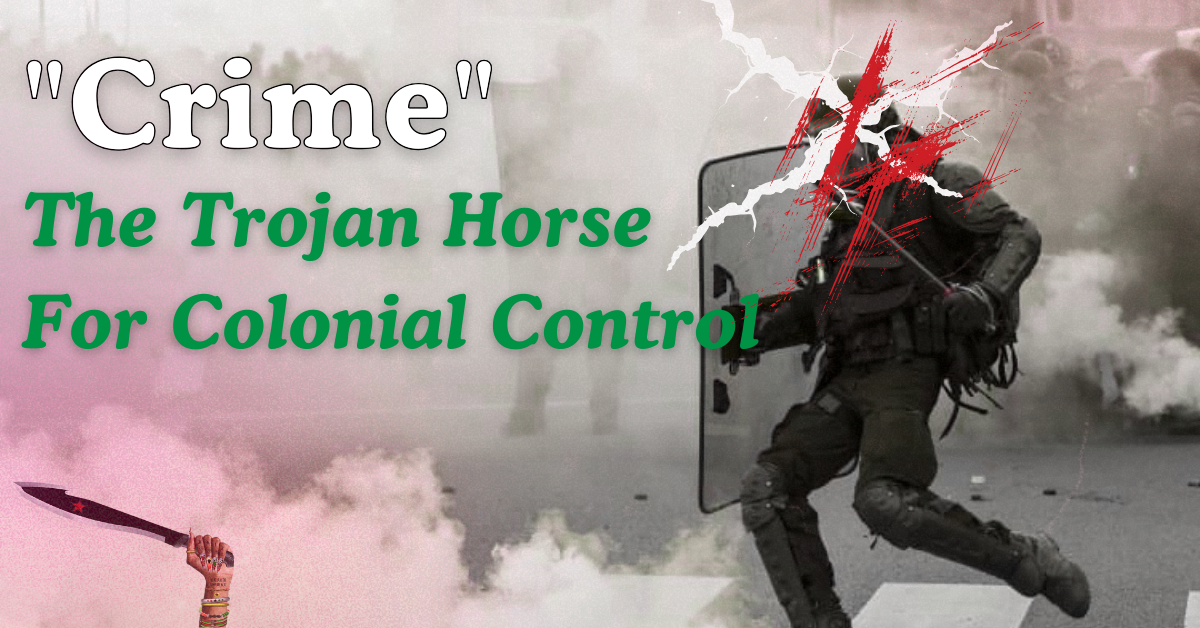
“Crime”, The Trojan Horse For Colonial Control
The concept of “crime” is not a fixed, objective reality but a fluid and politically potent construct which has been meticulously weaponized to serve the interests of power. Crime is in fact a dialectical product of the very systems of domination it purportedly challenges. An elusive chameleon, the shifting definitions of crime justifies the expansion…
-

The Soviets Defeated Nazism, but Western Fascism Lived On
While China and Russia honor their historic defeat of fascism, the West has revitalized it. The doctrine of exceptionalism serves as a modern justification for genocide and imperial aggression.
-

Wells Fargo Charged with Complicity by Climate Activists
Calling on Wells Fargo Bank to “Stop Fracking US” climate crisis activists on July 23 blocked the bank’s world headquarters building entryways, occupied an outdoor plaza and painted a mural illustrating their concerns in protesting and drawing attention to the bank’s investments and funding that have contributed to climate destruction, Israel’s genocide in Gaza, the…
-

In India’s Sugarcane Belt, Thousands of Women Workers Undergo Forced Hysterectomies
For years, women in the Beed district have documented that physicians have performed hysterectomies on them without their informed consent, with researchers estimating that about 4,605 women in the district were forced or coerced into having hysterectomies between 2016 and 2019. Maharashtra has about one-third of India’s 506 sugar factories, according to the latest data…
-

Social media fuels smoking and vaping among children, especially girls, study shows
Children and teens who spend hours scrolling social media are far more likely to smoke or vape than their peers, with the highest risks seen among girls and heavy users, according to new research.
-

Is RFK Jr. backing Big Food’s drive to overturn tough new state laws?
For months, HHS Secretary Robert Kennedy Jr. has crisscrossed the nation advancing his “Make America Healthy Again” agenda — spotlighting plans to crack down on unhealthy ultra-processed foods, and praising state-level efforts to restrict chemical food additives and bolster consumers’ right to know. But in an interview with Bloomberg, Kennedy’s comments echoed Big Food’s talking…
-

Suffer Little Children — Poisoned by pesticides and damaged by ultra-processed foods
The UN Convention on the Rights of the Child… makes it clear that states have an explicit obligation to protect children from exposure to toxic chemicals, from contaminated food and polluted water, and to ensure that every child can realise their right to the highest attainable standard of health. These and many other rights of…
-

Venezuela: The Monroe Doctrine in the Age of Piracy
Reports from institutions responsible for analyzing this global phenomenon show that the United States’ aggressive maneuvers in the Caribbean were not aimed at drug trafficking: Reports from the UN, the DEA, the European Union, and the World Customs Organization over several years reveal that Venezuela is an “irrelevant” country in terms of drug production and…
-

A Five-Pronged Strategy to End Plastic Pollution in Bangladesh—With People at the Center
Plastic pollution is one of the most pressing environmental issues in Bangladesh, threatening ecosystems, public health, and urban hygiene. Experts agree that the crisis stems more from its irresponsible use and widespread mismanagement than from plastic production itself. Plastic’s low cost and convenience, combined with a lack of viable alternatives, have made it the default…
-

Unilateral and Illegal Sanctions–Mainly by the United States–Kill Half a Million Civilians Per Year
Those who do not live in war zones or in suffocated countries are forced to live life as if there is nothing strange about what is happening around us. When we read about war, it is disconnected from our lives, and many of us want to stop listening to anything about the human misery caused…