Welcome to our collection of articles dedicated to green politics. As our world grapples with pressing environmental and societal challenges, the green political movement emerges as a beacon of change.
These articles explore core areas of green politics such as: degrowth, demilitarization, union and worker rights, and anti-capitalism.
Discover the nuances of degrowth as we examine strategies to reshape economies, moving away from military and capitalist growth models toward a more balanced, regenerative approach. Explore the imperative of demilitarization, unraveling the environmental and social impacts of excessive military expenditures, and delving into proposals for redirecting resources towards constructive, peace-building endeavors. Anti-capitalism is a key theme, challenging the prevailing economic systems that prioritizes profit over people and the environment. Union and worker rights in politics is another key area. Our articles dissect the green political stance on restructuring economies to prioritize social justice, environmental sustainability, and community well-being.
This thought-provoking content analyzes the intersectionality of these principles, offering insights into how green politics seeks to create a world where ecological responsibility, demilitarization, and anti-capitalist values converge for the betterment of society and the planet.
We hope you enjoy these explorations of the progressive ideals of green politics, providing you with valuable perspectives, informed analyses, and potential solutions to the challenges we face. Stay engaged, informed, and inspired, and let’s pave the way toward a future guided by the principles of degrowth, demilitarization, and anti-capitalism.
Colombia’s decision to withdraw its intervention in South Africa’s case against Israel at the International Court of Justice does not affect the proceedings, South Africa’s arguments or the Court’s jurisdiction, according to Euro-Med Human Rights Monitor. The organisation explains that Colombia was an intervening state under Article 63 of the ICJ Statute, not the applicant, and therefore could not halt or withdraw the case itself. The article also examines Colombia’s continuing obligations under the Genocide Convention, including the duty to prevent and punish genocide. It calls on states to support international accountability efforts and uphold the independence of the Court.
Trump’s campaign to bring Greenland under US control is presented as a national-security project, but Greenlanders have overwhelmingly rejected joining the United States. Vijay Prashad examines the island’s strategic importance, the extensive US military presence already established there, and the historical costs borne by Greenlanders. The article places Trump’s demands within the broader framework of the Monroe Doctrine and its modern “Donroe Doctrine” formulation, linking Greenland to Washington’s wider hemispheric ambitions. It also traces Greenland’s struggle for self-government and independence, arguing that strategic interests, mineral resources and military geography cannot override the political rights and self-determination of Greenland’s people.
Gaza has the world’s largest concentration of child amputees thanks to Israel’s genocidal war. Now, as Australian charities seek to deliver hundreds of wheelchairs to the children injured in the onslaught, Israel has reportedly been blocking them for more than a year and a half.
When Tony Wood talks about the debates of the Mexican left in the 1920s and 30s, some of the questions sound familiar. For example, when a more progressive but still capitalist government is in power, as in Mexico after its 1910 revolution, some in the broad left condemned it, others supported it as a positive step. This debate is occurring again today. Is the Morena party a revolutionary force, a “4th transformation”? Or is it still fundamentally a capitalist party like the old PRI, just throwing the poor a bigger bone?
The Coalition for the Elimination of Imperialism in Africa
The debate over constitutional reform in the Democratic Republic of Congo is unfolding amid a deeper security, economic and social crisis. This article examines the proposed changes through a class-based and anti-imperialist perspective, arguing that institutional reform cannot be separated from the material conditions facing Congolese workers and communities. It traces the political evolution from the 2006 Constitution and Félix Tshisekedi’s rise to power to the current referendum process, while examining concerns over a possible third presidential term. The article also considers the country’s vast mineral wealth, foreign economic interests, poverty and weak public services, and argues that lasting democratic transformation requires greater popular control over resources and institutions.
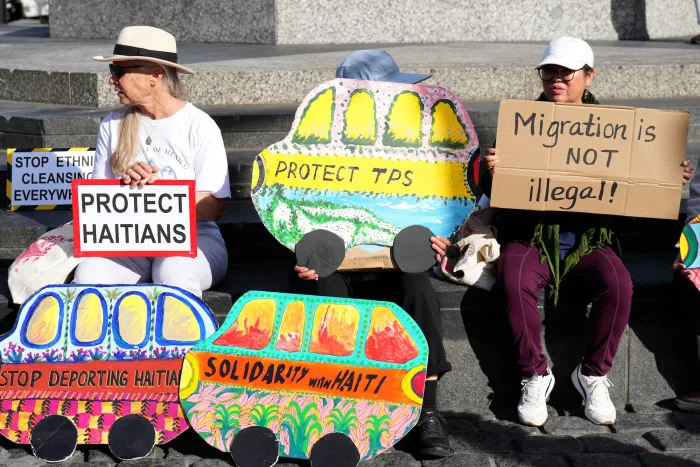
Citing the 70% depopulation of Gaza, Israeli Defense Minister Israel Katz vowed to “finish the job” of what he called Palestinian “migration”—a euphemism, say critics, for ethnic cleansing.
Meet Me in St. Louis The Dream of White Supremacy Meet Me in St. Louis premiered on November 22, 1944, in St. Louis, Missouri. The New York premiere took place a few days later, on November 28. It was the first hit from MGM’s musical department, headed since 1940 by Arthur Freed, the writer of some of the best-known songs in the United States during the 1920s and 1930s, who would go on to produce some of the most memorable films of those decades as well. It was Arthur Freed who acquired the copyrights to a series of stories […]
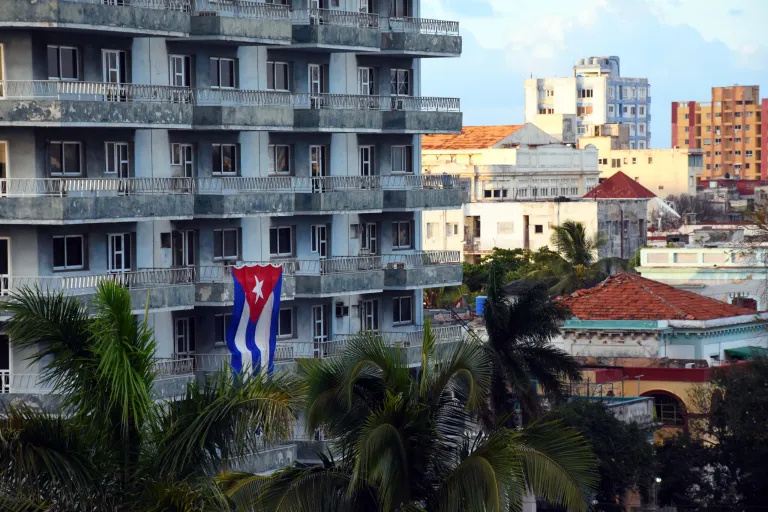
The Trump administration has already cut off Cuba’s access to oil. Now it’s attempting to starve the Cuban people, targeting the country’s capacity to grow, process, and import food — unless it buys from US corporations.
Xi Jinping’s China cannot be understood simply as a return to Mao or a continuation of Deng Xiaoping. This article examines how Xi’s leadership is responding to contradictions produced by decades of reform and rapid economic development. It traces Mao’s concern with bureaucratic privilege and Party accountability, Deng’s emphasis on developing productive forces, and Xi’s focus on Party discipline, anti-corruption, national sovereignty and Common Prosperity. The article argues that Xi has retained the economic and technological foundations built since 1978 while revisiting questions of socialist distribution, political discipline and ideological purpose. At the centre is Mao’s unfinished question of how the Communist Party can supervise itself.